 AnavClouds Analytics.ai
7 hours ago in Business Services
AnavClouds Analytics.ai
7 hours ago in Business Services
Sosial Bookmarking Side med Høy Autoritet for Norsk SEO i 2026 - A2Bookmarks Norge
A2Bookmarks Norge er den ledende social bookmarking site i Norge, skreddersydd for norske brukeres behov. Denne sosiale bookmarking site for Norge lar deg enkelt lagre, organisere og dele dine favoritt-nettsteder og lenker med et brukervennlig grensesnitt. Enten du er en bedrift som ønsker å øke din online synlighet i det norske markedet, eller en privatperson som søker en bedre måte å administrere dine viktigste nettesider på, tilbyr A2Bookmarks de verktøyene du trenger. Øk autoriteten til din nettside og forbedre søkemotoroptimaliseringen din ved å bygge relevante tilbakekoblinger gjennom vårt norske bookmarking-nettverk. Som en av de beste norske social bookmarking sites for 2026, inviterer vi deg til å bli med i det voksende fellesskapet, oppdage nyttig innhold fra hele Norge, og forsterke din digitale tilstedeværelse med Norges fremste plattform for sosiale bokmerker. Utforsk de viktigste social bookmarking sites i det norske markedet for optimal SEO-ytelse.
What’s Actually Driving Business Intelligence Trends in 2026 anavcloudsanalytics.ai
AnavClouds Analytics.ai
7 hours ago in Business Services
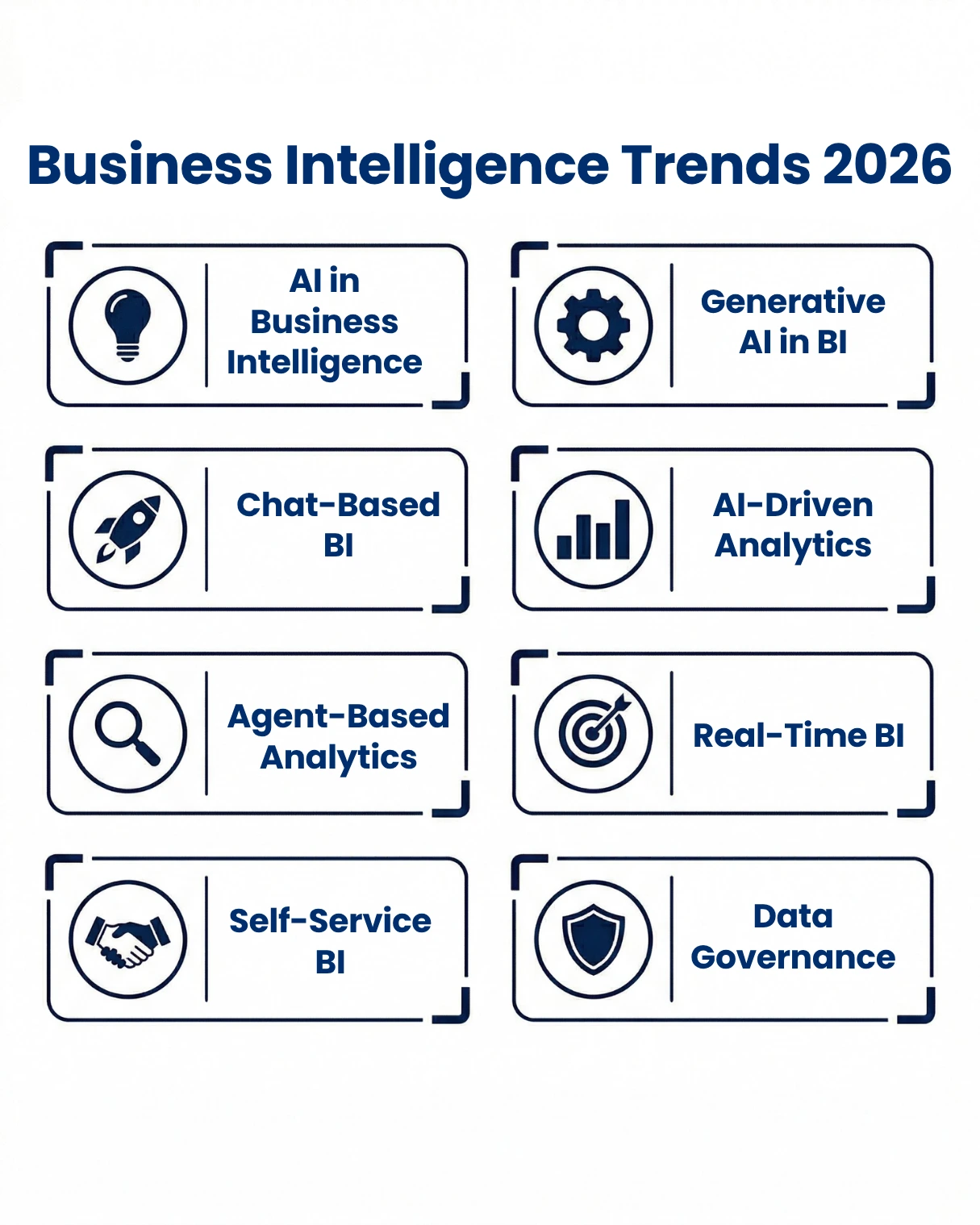
Not long ago, getting meaningful business insight meant waiting—sometimes days—for a report that often arrived too late to matter. In 2026, that model has fundamentally changed. Business intelligence (BI) is no longer just about dashboards and historical reporting; it’s about delivering real-time, actionable intelligence that helps organizations make faster and smarter decisions.
This shift marks a clear turning point. Businesses are no longer satisfied with knowing what happened—they want to understand why it happened and what to do next. That demand is driving the evolution of BI into a more dynamic, AI-powered ecosystem.
From Reports to Real-Time Intelligence
Traditional BI systems were largely reactive. They provided a snapshot of past performance, leaving teams to interpret the data and decide on next steps. Today, that gap between insight and action is shrinking rapidly.
Modern BI platforms process data continuously, enabling real-time visibility into operations. Whether it’s tracking sales performance during a live campaign or identifying supply chain disruptions as they happen, organizations can now respond instantly instead of retrospectively.
AI Is Now Core to BI
Artificial intelligence has moved from experimentation to essential infrastructure. In 2026, AI is deeply embedded within BI systems, working behind the scenes to detect anomalies, predict outcomes, and automate routine analysis.
Instead of manually scanning dashboards, teams are alerted to issues as they emerge—like a sudden drop in product demand or early signs of customer churn. AI not only highlights these patterns but often explains them, helping businesses act faster with greater confidence.
Generative AI Changes How We Use Data
One of the most transformative developments is the rise of generative AI in BI. Users no longer need technical expertise to extract insights. They can simply ask questions in plain language and receive detailed, context-aware responses.
This shift has made data more accessible across organizations. Executives can generate summaries instantly, marketers can explore campaign performance on demand, and finance teams can model different scenarios without relying on analysts. The result is faster decision-making at every level.
Conversational BI Removes Bottlenecks
Closely related is the growth of conversational BI. Instead of waiting for data teams to build reports, employees can interact directly with data through chat-based interfaces.
This eliminates traditional bottlenecks and empowers non-technical users to access insights independently. Sales teams can check pipeline health, operations can monitor logistics, and leadership can ask follow-up questions in real time—all without delays.
Predictive and Autonomous Analytics Take Over
Another major shift is the move from descriptive to predictive analytics. BI systems now anticipate outcomes rather than simply reporting them. For example, early warning signs of customer churn or cash flow issues can be identified weeks in advance, giving businesses time to act.
Taking this a step further, agent-based analytics introduces automation into decision-making. AI agents can execute actions—such as reallocating marketing budgets or triggering inventory reorders—based on real-time insights. This reduces manual effort and ensures faster responses to changing conditions.
Data for Everyone, Not Just Analysts
Data democratization continues to be a key trend. Self-service BI tools allow non-technical users to explore data, create reports, and generate insights without relying on IT or analytics teams.
This broader access to data fosters a more agile organization, where decisions are made closer to the point of impact. However, it also increases the importance of strong data governance.
Governance: The Foundation of Trust
As BI systems become more automated and AI-driven, data quality becomes critical. Poor data can lead to flawed insights—and in automated systems, flawed decisions at scale.
That’s why organizations are investing heavily in governance frameworks, including data quality monitoring, lineage tracking, and standardized metrics. Trustworthy data is what enables all other BI advancements to deliver real value.
The Bottom Line
Business intelligence in 2026 is no longer just a reporting function—it’s a decision engine. Organizations that embrace AI, real-time analytics, and self-service capabilities are gaining a clear competitive edge.
The difference isn’t in how much data a company has, but in how effectively it uses it. As BI continues to evolve, the focus is shifting from insight generation to action—and the businesses that adapt fastest are the ones pulling ahead.
Source: https://www.anavcloudsanalytics.ai/blog/whats-actually-driving-business-intelligence-trends/
voters
Report Story 
Related Stories








Recent Stories